Evaluating Change Stitch for Vintage Design Projects
Designers and creatives often seek typefaces that evoke specific eras or emotions, and the retro aesthetic remains a powerful tool in visual communication. Change Stitch is a display font designed to meet this demand, offering a cool, vintage-style appearance that mimics the look of hand-stitched lettering. When evaluating typography for a new project, understanding the specific characteristics, technical capabilities, and ideal use cases of a font like Change Stitch is essential for making an informed decision.
Understanding the Aesthetic and Style
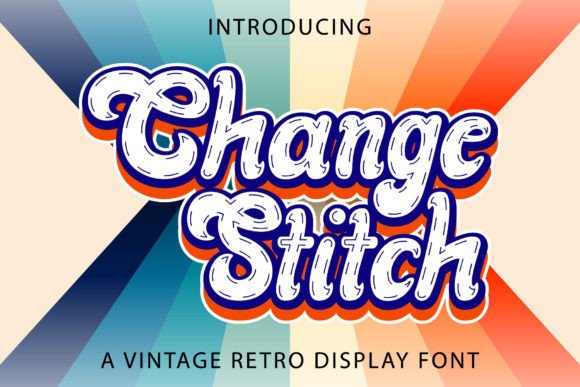
At its core, Change Stitch is a display typeface characterized by its textured, stitched appearance. Unlike clean sans-serif or traditional serif fonts, this family simulates the irregularities and charm of physical embroidery or hand-sewn fabric. This stylistic choice immediately signals a sense of nostalgia, craftsmanship, and warmth. The "vintage" descriptor is not merely a marketing term here; the glyph shapes and texture details are engineered to recall mid-20th-century signage, classic apparel branding, and handmade stationery.
For those researching font options, it is important to note that Change Stitch functions best as a headline or accent font. Its detailed nature means it is not intended for body copy or long-form text where legibility at small sizes is paramount. Instead, it shines when used to create a focal point, adding that special retro touch to design ideas that require a distinct personality. The visual weight of the stitches provides enough contrast to stand out against various backgrounds, provided there is sufficient separation between elements.
Technical Features and Accessibility
Beyond aesthetics, the technical construction of a font dictates its usability in professional workflows. A significant feature of Change Stitch is that it is PUA encoded. PUA stands for Private Use Area, a section of the Unicode standard reserved for custom characters. In practical terms, this encoding ensures that all glyphs, ligatures, and alternate characters included in the font file are easily accessible through standard character map utilities on both Windows and macOS.
For designers who may not be familiar with advanced OpenType features, PUA encoding simplifies the process of accessing the full range of the typeface. Without this encoding, special characters might require complex keystroke combinations or specific software settings to reveal. With Change Stitch, users can typically copy and paste unique stylistic alternates directly from a character map into their design software. This reduces friction during the creative process and allows for quicker experimentation with different letterforms to achieve the desired look.
Ideal Applications and Use Cases
Determining whether Change Stitch aligns with a project's goals involves matching its personality to the brand or message. Based on its design attributes, there are several scenarios where this font serves as a strong fit:
- Logos and Branding: Businesses in the artisanal, craft, bakery, or vintage clothing sectors can leverage Change Stitch to communicate authenticity and hand-made quality. The stitched effect reinforces narratives of durability and traditional craftsmanship.
- Wedding and Event Invitations: The romantic and nostalgic feel of the font makes it suitable for wedding suites, particularly those with rustic, bohemian, or retro themes. It works well for monograms, save-the-dates, and menu headers.
- Stationery and Packaging: For product labels, especially on goods like jams, soaps, or coffee, Change Stitch can elevate the perceived value by suggesting a boutique origin.
- Social Media Graphics: In digital marketing, where capturing attention quickly is vital, the unique texture of Change Stitch can make posts stand out in a feed dominated by generic sans-serif types.
In these contexts, the font does more than convey words; it sets a mood. The expectation is that the viewer will associate the text with qualities like heritage, care, and individuality.
Considerations and Potential Tradeoffs
While Change Stitch offers distinct advantages for specific styles, it is not a universal solution. An objective evaluation requires acknowledging its limitations. The primary tradeoff is legibility. The intricate stitching details that give the font its character can become muddy when scaled down. Therefore, it should generally be avoided for paragraphs, legal disclaimers, or any interface element where quick reading is necessary.
Furthermore, the strong vintage personality of Change Stitch can clash with modern, minimalist, or corporate identities. If a brand aims to project cutting-edge technology, sleek efficiency, or strict professionalism, a stitched display font may send mixed messages. In such cases, the decorative nature of the typeface could undermine the intended tone of seriousness or innovation.
Another consideration is background contrast. Because the font relies on texture to define its shapes, placing it over busy or low-contrast backgrounds can render the letters indistinguishable. Designers must ensure adequate padding and color contrast to maintain readability. It often performs best on solid colors or simple textures that do not compete with the internal details of the glyphs.
Comparing Alternatives and Making a Decision
When selecting a font, it is helpful to compare Change Stitch against other options in the same category. If the goal is purely a retro vibe but the project requires higher legibility at smaller sizes, a simpler script or a distressed serif might be a more functional alternative. Conversely, if the project demands a highly decorative, maximalist look, other display fonts with swashes or excessive ornamentation might be more appropriate than the relatively grounded stitch style.
Decision-making should also factor in the versatility required for the brand's future growth. While Change Stitch is excellent for launching a specific campaign or defining a niche brand identity, companies planning to expand into diverse media formats may need a complementary sans-serif or serif pair to handle body text and UI elements. Relying solely on a display font like Change Stitch for all communications can limit flexibility.
Ultimately, the choice to use Change Stitch depends on the specific narrative the design needs to tell. If the objective is to evoke warmth, nostalgia, and a tactile sense of history, this font provides a robust and technically accessible solution. Its PUA encoding ensures that designers can fully utilize its character set without technical hurdles, making it a practical choice for logos, invitations, and branding materials where a vintage touch is desired. However, for projects prioritizing neutrality, high-density information, or ultra-modern aesthetics, exploring alternative typefaces remains a prudent step.
By weighing the aesthetic benefits against the functional constraints, designers can determine if Change Stitch is the right typographic voice for their next creative endeavor.