Romid Road: The Strategic Fusion of Modern Precision and Whimsical Narrative
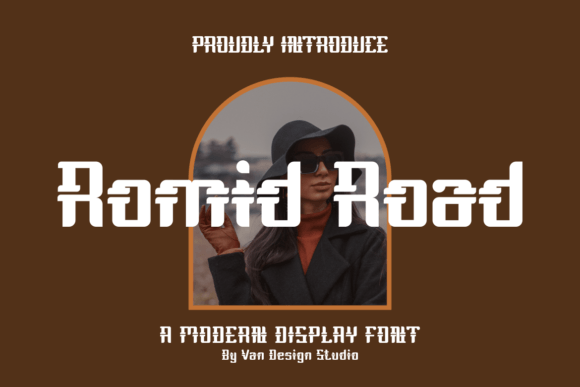
In the rapidly evolving landscape of visual communication, typography has ceased to be merely a vessel for information. It has become a primary driver of brand identity, emotional resonance, and user engagement. As digital spaces become increasingly saturated, professionals across marketing, design, and entrepreneurship are seeking tools that cut through the noise without sacrificing sophistication. Enter Romid Road, an incredibly cool and unique display font that has captured the attention of forward-thinking creators. With a modern yet whimsical style, Romid Road does more than decorate text; it immerses designs into a magical world, offering a distinct competitive edge in a market that craves authenticity and narrative depth.
The Evolution of Display Typography in a Digital-First Economy
To understand the significance of Romid Road, one must first analyze the broader shifts occurring within the creative industry. For decades, corporate communication relied heavily on safe, sans-serif typefaces that prioritized legibility above all else. While functional, this approach often resulted in a homogenized visual culture where brands struggled to distinguish themselves. Today, however, consumer expectations have shifted dramatically. Audiences are no longer satisfied with sterile interfaces; they demand experiences that feel human, curated, and emotionally engaging.
This shift is driving a renaissance in display typography. Designers and marketers are moving away from generic solutions toward fonts that carry personality and story. Romid Road exemplifies this transition. It represents a new category of typefaces that balance the clean lines required for modern digital readability with the organic, playful curves that evoke nostalgia and wonder. This duality is not accidental; it is a direct response to a market that values both efficiency and enchantment.
Why Romid Road Resonates with Contemporary Creators
The attention surrounding Romid Road is not merely a trend cycle anomaly; it is rooted in its ability to solve specific creative challenges. In an era where attention spans are fleeting, the "hook" of a design is critical. A headline set in a standard font may be read, but a headline set in Romid Road is felt. Its unique character shapes invite the viewer to pause, creating a micro-moment of engagement that can significantly impact conversion rates and brand recall.
Furthermore, the font's versatility addresses the changing workflows of modern freelancers and agencies. Historically, designers had to choose between a font that was "fun" but unprofessional, or "professional" but boring. Romid Road dismantles this binary. It allows a tech startup to appear approachable without losing credibility, or a lifestyle brand to convey luxury without appearing aloof. This flexibility makes it an invaluable asset in diverse project portfolios, ranging from mobile app interfaces to large-scale outdoor advertising.
Integrating Magic into Business Strategy
For entrepreneurs and business leaders, the choice of typography is a strategic decision. The visual language of a company communicates its values before a single word of copy is consumed. Romid Road serves as a bridge between traditional business seriousness and the innovative spirit of the modern economy. By incorporating this font into branding materials, companies signal that they are attuned to contemporary aesthetics and are willing to embrace creativity as a core business function.
Consider the rise of the "experience economy." Consumers are increasingly purchasing stories and feelings rather than just products. A coffee shop using Romid Road on its packaging isn't just selling beans; it is selling a morning ritual filled with warmth and possibility. A software company using it for its campaign headers isn't just listing features; it is promising a seamless, almost magical user experience. The font acts as a psychological cue, aligning the product with positive, aspirational emotions.
- Brand Differentiation: In crowded marketplaces, unique typography creates an immediate visual signature that competitors cannot easily replicate.
- Emotional Connection: The whimsical elements of Romid Road foster a sense of friendliness and accessibility, lowering barriers between brand and consumer.
- Versatility Across Media: Whether rendered on a high-resolution retina display or printed on textured paper, the font maintains its integrity and charm.
Practical Applications and Workflow Enhancements
Implementing Romid Road into a professional workflow requires a nuanced understanding of hierarchy and context. Because it is a display font, its power lies in its usage for headlines, logos, pull quotes, and call-to-action buttons. Using it for body text would dilute its impact and potentially hinder readability over long passages. However, when paired with a clean, neutral sans-serif for body copy, Romid Road creates a dynamic typographic system that guides the eye and structures information effectively.
For web designers, the font offers excellent scalability. Its strokes are designed to remain crisp at various sizes, ensuring that the "magical" details do not disappear on smaller mobile screens. This technical robustness is essential in a responsive design environment where content must adapt fluidly to different devices. Moreover, the font's open-source or commercially available nature (depending on licensing) allows for seamless integration into existing design systems, reducing the friction often associated with adopting new type assets.
- Logo Design: Utilize Romid Road to create logotypes that stand out in app stores and social media profiles, leveraging its unique letterforms to build instant recognition.
- Campaign Headers: Apply the font to landing pages and email marketing headers to increase click-through rates by capturing attention immediately.
- Packaging and Merchandise: Extend the brand universe onto physical goods, where the tactile quality of the font enhances the unboxing experience.
- Social Media Graphics: Use the font in Instagram stories and TikTok overlays to maintain a consistent, engaging aesthetic that encourages sharing.
The Broader Cultural Context: Nostalgia Meets Futurism
The popularity of Romid Road also reflects a larger cultural current: the blending of retro nostalgia with futuristic optimism. The whimsical aspects of the font often echo the playful typography of mid-century advertising and storybooks, tapping into a collective desire for simpler, more joyful times. Simultaneously, its modern geometric underpinnings ground it in the present, ensuring it feels relevant to today's technology-driven society.
This synthesis is particularly relevant for industries undergoing digital transformation. As artificial intelligence and automation handle more routine tasks, the human element of creativity becomes even more precious. Fonts like Romid Road celebrate this human touch. They remind us that behind every algorithm and interface, there is a human story to be told. For marketers and content creators, leveraging this sentiment is key to building loyal communities.
Future-Proofing Your Visual Identity
Adopting a distinctive typeface is an investment in the longevity of a brand's visual identity. While trends come and go, the fundamental need for distinctiveness remains constant. Romid Road is positioned not as a fleeting fad, but as a staple for brands that intend to grow. Its balanced design ensures that it will not feel dated in a few years, providing a stable foundation for long-term brand evolution.
Moreover, as the metaverse and immersive digital environments continue to develop, the demand for typography that translates well into 3D spaces and augmented reality will surge. The bold, defined shapes of Romid Road make it an excellent candidate for these emerging frontiers. Its ability to retain character when extruded or animated suggests that it is ready for the next generation of digital interaction.
In conclusion, Romid Road is more than just a collection of letters; it is a strategic tool for modern communication. It addresses the complex needs of today's professionals who must navigate the intersection of art and commerce. By offering a modern yet whimsical style, it empowers creators to immerse their audiences in a magical world, transforming passive viewers into active participants. For those willing to embrace its unique potential, Romid Road offers a pathway to more engaging, memorable, and successful design outcomes.
As we move forward, the distinction between "functional" and "beautiful" will continue to blur. The winners in the next decade of design will be those who understand that utility and emotion are not mutually exclusive. Romid Road stands as a testament to this philosophy, proving that even in a data-driven world, there is always room for a little bit of magic.